GoLive Celebration – Bdat.ACADEMY Has Officially Launched!
November 17 marks a true milestone in the life of BDAT. On this day, during...
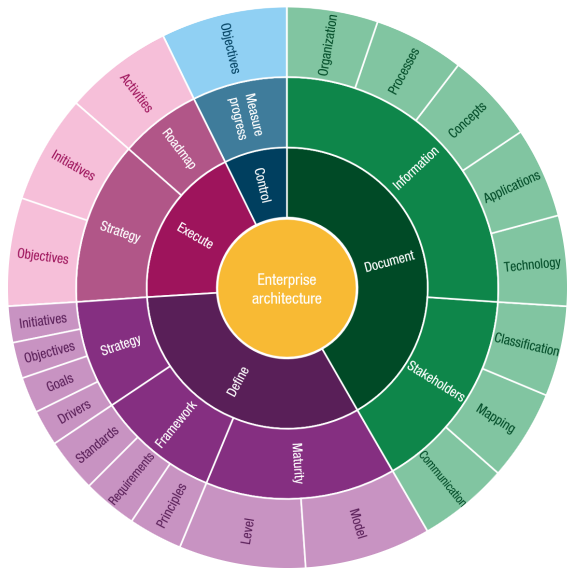
Read moreThis practical course is based on the Enterprise Architecture Implementation Wheel (EAWheel) methodology, which provides a visual and structured framework for implementing and operating Enterprise Architecture.
The Wheel consists of four main stages (Document, Define, Execute, Control), each with defined steps and key focus areas.
The method is easy to adapt, requires no lengthy preparation, and is an ideal starting point for organizations beginning their EA journey. It supports gradual implementation and interative approaches, while integrating seamlessly with the processes of the TOGAF® Standard, enabling its simple and practical use within the organization.
Duration: 2 days (2×8 hours)
Format: practice-oriented, with interactive exercises, case studies, and group work.
Participants will be able to:
The course is useful for:
1.1 EA fundamentals
– What is Enterprise Architecture and why it matters
– The business value of architecture
– Key roles and stakeholder groups
1.2 Overview of architecture frameworks
– Brief introduction to TOGAF® framework, ArchiMate®, and other standards
– How EAWheel relates to these and integration possibilities
1.3 Architecture governance and implementation
– EA maturity levels
– Governance mechanisms and prerequisites for implementation
– How EAWheel supports the success of the first EA implementation steps
– Inner ring: 4 main stages: Document, Define, Execute, Control
– Middle ring: steps
– Outer ring: key focus areas and deliverables
– Information: classification, mapping, communication
– Stakeholders: identification, categorization, needs, communication
– Current architecture views: processes, organization, information, applications
– Maturity: EA maturity assessment
– Framework: principles, requirements, standards
– Strategy: strategic goals, challenges, expected outcomes
– Work Package Portfolio Map: structuring initiatives
– Architecture Roadmap: transitional architectures and timelines
– Implementation plan aligned with strategic priorities
– Measure Progress: dashboards, spider charts, indicators
– Evaluating results and feeding lessons learned back into the process
| Training | Date | Location | Language |
|---|

November 17 marks a true milestone in the life of BDAT. On this day, during...
Read more


