TOGAF® Framework
The TOGAF® Standard is one of the most recognized and trusted enterprise architecture frameworks, used globally by organizations to improve business efficiency. It provides a unified approach and shared language for architecture professionals, supporting transparency and collaboration. Knowledge of the TOGAF® framework enhances professional credibility, enables more effective work, and can open up new career opportunities.

Benefits for IT
The TOGAF® framework provides IT with a structured framework to understand, design, and develop complex technological environments from a systems perspective. It offers a clear methodology to ensure that IT initiatives are closely aligned with business objectives, supporting their realization in a structured and transparent way.
From a technology standpoint, the TOGAF® framework enables the creation of unified, well-documented architectures that help manage system interdependencies, legacy system replacement, modernization, and the introduction of new solutions. It helps identify redundancies, optimize the IT portfolio, and define a long-term technology vision.
This framework is not only valuable for enterprise architects but also for software architects, system designers, technology and IT leaders, as well as DevOps and Cloud experts. The TOGAF® approach allows IT to act not merely as an executor but as a strategic partner—one that understands how technology contributes to business value creation. Its standardized structure and governance processes enhance decision-making, collaboration, and scalability.

Benefits for business
The TOGAF® Standard helps business leaders understand how organizational operations can be transformed using digital and technological tools. The framework offers a clear view of how technology and IT investments align with long-term business goals. This ensures that developments are not isolated efforts but intentionally coordinated to support business transformation.
This alignment is especially critical in today’s rapidly changing economic landscape, where adaptability and flexibility provide a strong competitive edge. The business architecture elements of the TOGAF® framework offer practical tools not only for decision-makers but also for cross-functional roles such as project and product managers, business analysts, and business architects. It helps improve transparency across operations, bridges the gap between business needs and technical implementation, and enhances the impact and sustainability of initiatives. The shared vocabulary and unified mindset foster stronger collaboration across diverse roles.
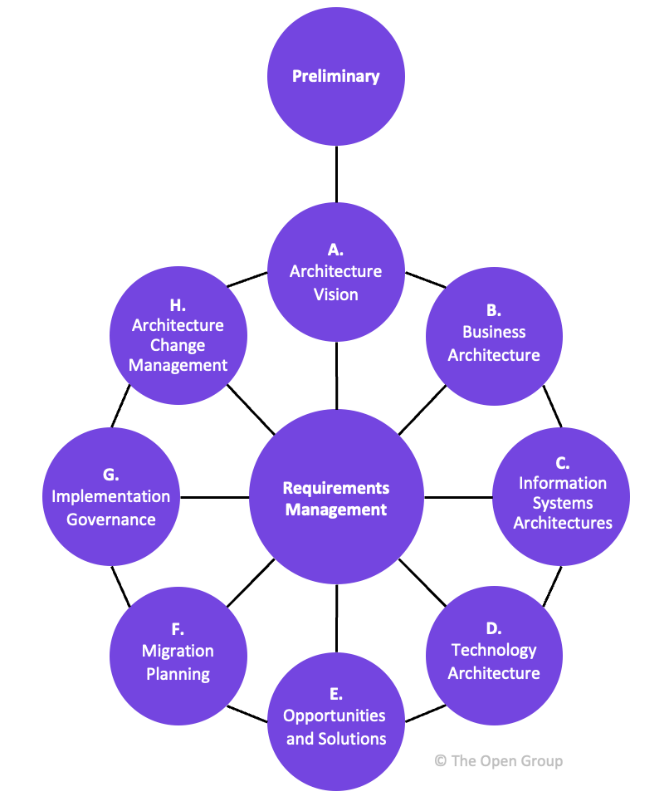
How is it structured?
The TOGAF® Standard, 10th Edition is structured into two main parts:
Fundamental Content – contains the core concepts, the Architecture Development Method (ADM), architecture domains, principles, and best practices that form the foundation of Enterprise Architecture work. The ADM is the heart of the standard, providing a proven, iterative process for developing, governing, and evolving architectures.
Series Guides – detailed, topic-specific guides that provide direction on tailoring the Fundamental Content for different contexts, such as agile enterprises, digital transformation, or security architecture.
Image from The Open Group, TOGAF® Standard, 10th Edition. © The Open Group. Used with permission. All rights reserved.

Officially Accredited by The Open Group
The TOGAF® Enterprise Architecture and TOGAF® Business Architecture training courses are accredited by The Open Group. Our programs meet the highest international standards and prepare participants for globally recognized certifications — with practical guidance, clear structure, and real-world relevance.
All of this is delivered based on the latest TOGAF® Standard, 10th Edition, offering up-to-date, industry-aligned methodology.
What training programs are available?
Whether you are just getting started with architecture or you are an experienced professional aiming to expand your expertise, our training programs are designed to fit your needs. Through real-life examples, we demonstrate the most effective methods and tools that help optimize enterprise operations, improve business processes, and align IT solutions with strategic objectives.
How to Become an Applied Practitioner?
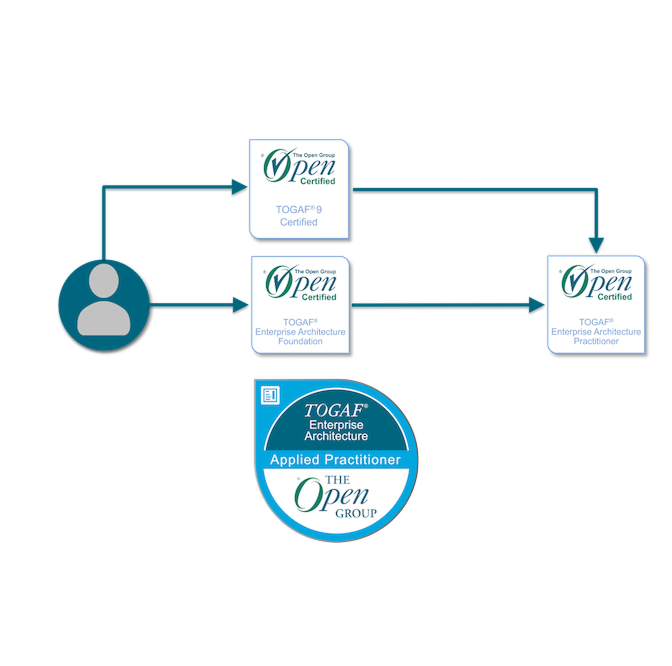
Applied TOGAF® Enterprise Architecture Practitioner
This certification can only be obtained through an accredited training course – specifically by completing the TOGAF® Enterprise Architecture Training at the Practitioner, Combined, or Bridge level, along with successfully passing the theoretical exam and completing the required Learning Studies assignments.
The Applied Practitioner level validates not only a solid grasp of theoretical knowledge but also the ability to apply the TOGAF® methodology to real-world business and technology scenarios. The certificate is issued by The Open Group based on the professional assessment of an accredited training partner.
As a highly selective and distinguished certification, Applied Practitioner signifies genuine practical competence and affirms a strategic role in the field of Enterprise Architecture.


